The Purpose of Wireframing: Why It’s the Foundation of Great Digital Experiences
Before a website becomes visually polished or development-ready, it starts in a much simpler form: the wireframe. Often underestimated, wireframing is one of the most important stages in building effective digital products. It defines structure, clarifies intent, and ensures that design decisions are grounded in strategy and not in assumption.
For scalable, high-performing digital platforms, wireframing is not optional. It is foundational.
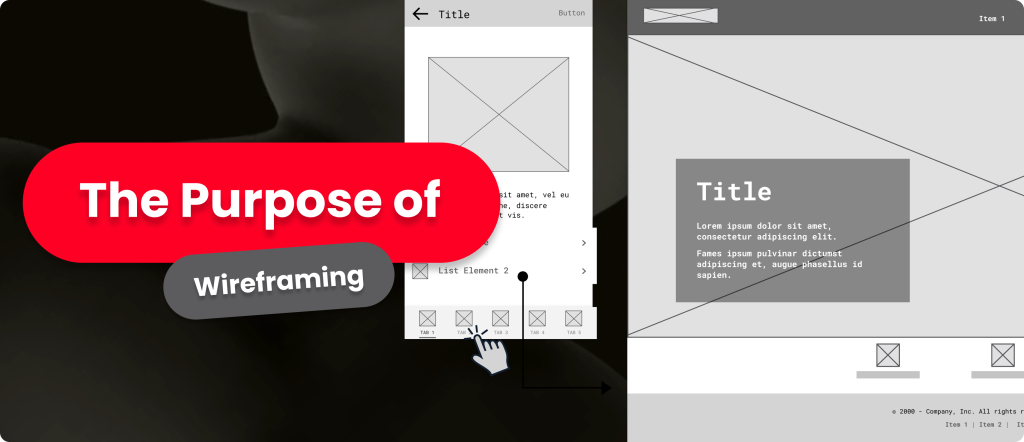
What is Wireframing?
Wireframing is the process of creating a simplified visual blueprint of a website or application. It focuses on structure, layout, and functionality rather than visual design.
A wireframe typically includes:
Page structure and hierarchy
Placement of key elements (navigation, content, CTAs)
User flow between sections or screens
Functional behaviour of components
It strips away colour, typography, and imagery to focus purely on how a user will interact with the product.
Why Wireframing Matters
Wireframing exists to answer one critical question: how will this experience actually work for the user?
Without wireframes, teams risk designing based on aesthetics before understanding structure and functionality. This often leads to inefficiencies, rework, and misaligned user journeys.
A strong wireframe ensures:
Clear alignment between stakeholders
Early validation of user flows
Faster design and development cycles
Reduced risk of costly changes later in the process
It brings clarity before complexity is introduced.
Wireframing as a Strategic Tool
Wireframing is a design step, one that is intrinsically strategic.
At this stage, teams define:
What users need to achieve on each page
How information should be prioritised
Where conversion points should exist
How navigation supports the broader journey
This is where UX strategy begins to take shape. Decisions made here directly influence performance, usability, and conversion outcomes for the website or application.
The Role of Wireframing in User Experience (UX)
User experience is built on structure, not decoration.
Wireframes help teams:
Map intuitive user journeys
Remove unnecessary complexity
Identify friction points early
Ensure consistency across pages and flows
By focusing on logic before aesthetics, wireframing ensures that design decisions are rooted in usability.
Wireframing and Development Efficiency
One of the most overlooked benefits of wireframing is its impact on development.
Clear wireframes:
Reduce ambiguity for developers
Minimise back-and-forth during builds
Speed up implementation timelines
Improve accuracy of final output
When structure is well-defined upfront, development becomes more predictable and efficient.
Wireframing for SEO and GEO
Wireframing also plays a crucial role in search visibility and modern discoverability. For SEO (Search Engine Optimisation) and GEO (Generative Engine Optimisation), structure matters.
Well-planned wireframes ensure:
Logical content hierarchy (H1, H2, H3 structure)
Clear internal linking pathways
Intent-driven page layouts
Proper prioritisation of key content blocks
Search engines and AI-driven systems both rely on structure to understand content. A strong wireframe lays the groundwork for that understanding.
Types of Wireframes
Depending on the stage of a project, wireframes can vary in fidelity, both serve different purposes, but both are essential in a structured design process:
Low-Fidelity Wireframes
Simple sketches or grayscale layouts
Focus on structure and flow
Used in early ideation stages
High-Fidelity Wireframes
More detailed layouts
Include spacing, component behaviour, and annotations
Often closely aligned with final UI structure
Common Mistakes in Wireframing
Even experienced teams can misuse wireframing if the intent is unclear. Some common pitfalls include:
Treating wireframes as final designs
Skipping wireframing altogether in favour of visual design
Overcomplicating early-stage wireframes
Ignoring user journeys in favour of page-level thinking
Effective wireframing is about clarity, not detail. This ensures strategic alignment for the project.
Wireframing in a Modern Digital Workflow
In modern product development, wireframing sits at the intersection of strategy, design, and development.
A typical workflow looks like:
Strategy and requirements definition
Wireframing (structure and UX logic)
UI design (visual language and branding)
Development and implementation
Optimisation and iteration
The Business Value of Wireframing
Beyond UX and development, wireframing has a direct impact on business outcomes. The wireframes help organisations:
Launch faster with fewer revisions
Improve conversion performance through better structure
Align teams around a shared vision
Reduce wasted design and development effort
In short, it ensures that digital investment is focused, intentional, and efficient.
Final Thoughts
Wireframing is often treated as a behind-the-scenes step, but in reality, it is one of the most important stages in digital product creation.
It defines how users move, how information is structured, and how effectively a platform performs.
For brands building scalable, high-performance digital experiences, wireframing is essential.
-------
Platinum Seed is the product development partner you’ve been looking for to provide tangible growth and real impact to your business. Let’s talk.