Digital marketing has evolved from a supporting business function into the central engine of modern brand growth. In 2026, it is no longer enough to “be online” or run isolated campaigns, brands need integrated, intelligent, and adaptive strategies that connect visibility, engagement, and conversion across multiple digital ecosystems.
This guide breaks down what digital marketing really means today, how it works in an AI-first world, and how brands can build scalable strategies that drive long-term growth.
What Digital Marketing Means in 2026
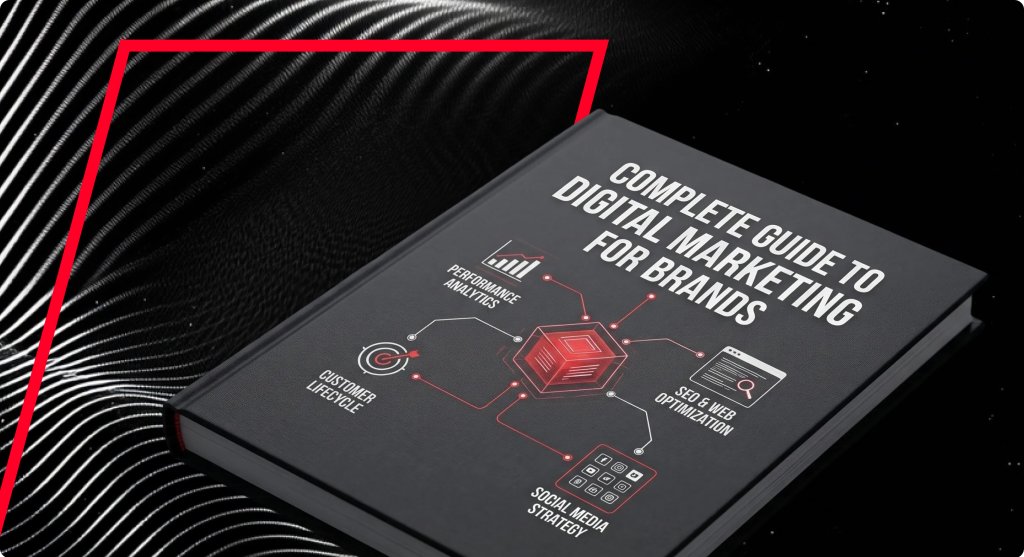
Digital marketing is the use of online channels, platforms, and data-driven strategies to attract, engage, and convert customers. But in 2026, it has fundamentally shifted.
We are now operating in an environment where:
Search engines are becoming answer engines
AI tools are shaping discovery before users visit websites
Users expect personalised, instant, and contextual experiences
Brand visibility depends on both SEO and GEO (Generative Engine Optimization)
This means digital marketing is no longer channel based, it is ecosystem-based.
The Shift from SEO to GEO and AI Search
Traditional SEO focused on ranking in search engines. Today, visibility depends on whether your brand is included in AI-generated answers across platforms like ChatGPT, Google AI Overviews, and other generative systems.
Recent industry research highlights a major shift:
Search is moving from “clicks” to citations
AI systems prioritise trusted, structured, and authoritative content
Brands must optimise for both humans and machines simultaneously
This evolution is known as Generative Engine Optimisation (GEO).
In practical terms, this means:
Content must be structured for AI readability
Brand authority and mentions across the web matter more than ever
Consistency across platforms improves discoverability
Core Pillars of a Modern Digital Marketing Strategy
A scalable digital marketing strategy in 2026 is built on five interconnected pillars:
1. Brand Strategy and Positioning
Before any campaign or channel activity, brands need clarity on:
Who they are
Who they serve
Why they matter
Strong positioning ensures every marketing effort reinforces the same narrative across platforms.
2. SEO and Content Ecosystems
SEO is no longer about isolated blog posts. It is about building content ecosystems that demonstrate authority across topics.
Key components include:
Topic clusters (not single keywords)
Structured content for AI interpretation
Internal linking that reinforces authority
High-quality, experience-driven content
Search visibility now depends on how well your content forms a coherent knowledge system, not just how well it ranks.
3. Paid Media and Performance Marketing
Paid digital marketing remains essential for scaling visibility quickly.
Core channels include:
Google Ads (Search & Display)
Paid social (Meta, LinkedIn, TikTok)
Retargeting and remarketing campaigns
The most effective strategies integrate paid media with SEO and brand strategy rather than treating them separately.
4. Social Media and Community Building
Social media has evolved from a distribution channel into a trust and community engine.
Modern brands use social platforms to:
Build authority and credibility
Engage in real-time conversations
Develop long-term customer relationships
Amplify content across networks
Community-driven marketing is now a key driver of organic growth.
5. Conversion Rate Optimisation (CRO) and User Experience
Traffic alone is no longer enough. Brands must ensure that every digital touchpoint is designed to convert.
This includes:
Website UX and performance optimisation
Clear conversion pathways
Messaging alignment across pages
Data-driven testing and iteration
The Role of AI in Digital Marketing
AI is no longer an add-on—it is embedded in every stage of the marketing process.
Today, AI is used for:
Content creation and optimisation
Audience segmentation and targeting
Predictive analytics
Campaign automation
Personalised customer journeys
AI also influences how users discover brands. Increasingly, the first interaction happens through AI-generated summaries rather than website visits.
This is why brands must optimise not only for search engines, but also for AI systems that interpret and recommend content.
Omnichannel is the New Standard
Customers no longer move in linear funnels. Instead, they interact across multiple touchpoints before making a decision.
A modern digital marketing strategy ensures consistency across:
Search engines
Social media platforms
Email marketing
Paid advertising
AI-driven discovery tools
Brands that succeed are those that create a single, consistent experience across all channels.
Key Trends Shaping Digital Marketing
Some of the most important shifts in 2026 include:
Rise of AI-first discovery and zero-click search
Increased importance of brand authority signals
Growth of GEO alongside traditional SEO
Expansion of content ecosystems over single pages
Stronger emphasis on trust, credibility, and expertise
These trends all point to one conclusion: visibility is no longer earned through one channel -it is earned through system-wide brand presence.
How Brands Can Build a Scalable Strategy
To build a future-proof digital marketing strategy, brands should focus on:
Aligning brand, content, and performance marketing
Investing in long-term SEO and GEO foundations
Building authority through consistent publishing
Using data to guide decisions, not assumptions
Integrating AI into workflows without losing human insight
The goal is not just to generate traffic, but to build sustained digital influence.
Final Thoughts
Digital marketing in 2026 is defined by integration, intelligence, and adaptability. The brands that win will not be those that simply produce more content or spend more on ads, but those that build connected systems across brand, search, AI, and customer experience.
At Platinum Seed, we believe the future of digital growth lies in combining strategy, creativity, and technology into a unified approach that scales.
The rules have changed, but the opportunity has never been greater.