Global audiences don’t behave the same and they shouldn’t be spoken to as if they do, yet many brands still try to stretch a single digital experience across wildly different markets. The result is predictable: mismatched messaging, inconsistent UX, fragmented data and a content team quietly losing its mind…
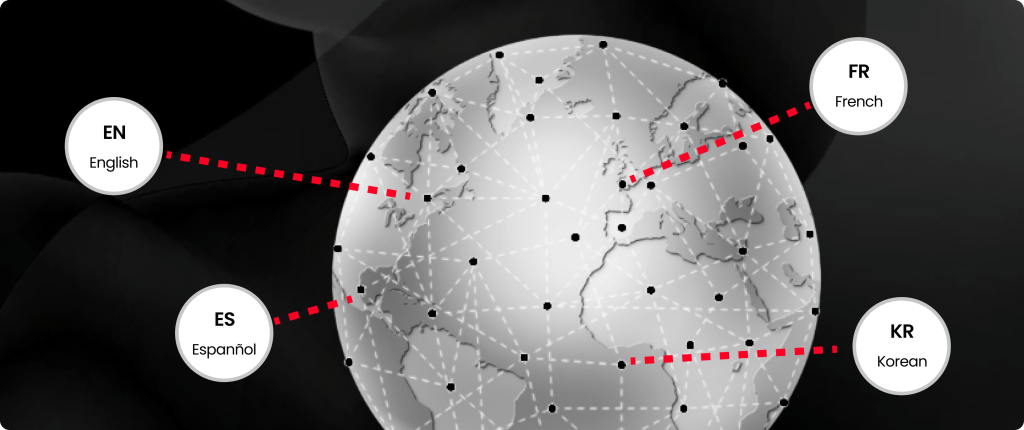
At Platinum Seed, we’ve spent years helping global organisations untangle this complexity. BrightPlan (a US–based financial wellness platform with a rapidly growing international footprint) is one example of how multi-regional and multilingual expansion forces teams to rethink everything from architecture and governance to content modelling and analytics.
This is what we’ve learned about building digital ecosystems that scale globally without losing local understanding.
The Real Challenge: One Brand, Many Contexts
A multi-regional or multilingual site is not just “the same website translated”. It is (and should be) a more nuanced operation:
Regions differ: Regulations, product availability, pricing models and market maturity shift from country to country.
Languages differ: Direct translation rarely captures tone, nuance or cultural expectations.
Teams differ: Global marketing wants alignment / Local teams need flexibility / Compliance wants control.
The problem? Most organisations try to solve this with a single CMS structure and a few workarounds, which works… until it doesn’t.
Scaling globally requires intention in both the platform and the operating model behind it.
Our Framework: Build Once, Flex Everywhere
At Platinum Seed, we approach multi-regional platforms with a simple philosophy: centralise what should be consistent, decentralise what must be local.
This shows up in three core areas:
1. Architecture Built for Structured Variability
You need a system that supports:
Global templates with local overrides
Region-specific content repositories
Feature toggles for market-dependent modules
Multiple languages across a single data model
For BrightPlan, for instance, the complexity wasn’t just language; it was regulatory variation across different territories. The solution was a modular architecture with strict content types but flexible presentation, allowing global consistency while adjusting language, product details and compliance messaging per region.
This kind of structure prevents the “forked-site syndrome”: 20 different versions of the site that eventually become unmaintainable.
2. A Governance Model That Actually Works
The tech is only half the story, because the workflow might matter even more.
We typically define:
Global roles: Brand guardians, UX owners, compliance and product.
Regional roles: Local marketing teams, translators, subject-matter input.
Approval flows: Automated checks, legal review gates, localisation pipelines.
The goal is not to add bureaucracy, but to prevent brand dilution, inconsistencies and rogue content decisions made in the name of “local flexibility”.
For BrightPlan’s global rollout, we implemented a governance layer that ensured key content types remained centralised, while region-specific assets could be created and published independently.
3. Translation That Goes Beyond Words
Most multilingual projects fail at localisation, not translation.
We establish workflows for:
Human + AI translation pairing (AI gets it done fast / humans get it done right)
Cultural adaptation (imagery, tone, legal wording, UX expectations)
Fallback logic (what users see when translations don’t exist)
Content parity management (ensuring regions stay in sync)
A global platform isn’t just about “saying things in different languages” – it’s about respecting how users consume, interpret and trust content in their own context.
Technical Complexity Often Sits Below the Surface
Some of the less-visible systems we design include:
SEO-aware localisation: tagging, regional sitemaps, canonical handling, market-specific metadata
Performance optimisation per region: CDNs, caching strategy, image transformations
Privacy and compliance overlays (GDPR, POPIA, SOC2, etc.)
Internationalisation of UI components (dates, currencies, formats, units)
Analytics segmentation for market-level insights
This is the difference between a site that “can technically display Spanish” versus one that truly operates as a global digital product ecosystem.
Why Global Platforms Fail and How We Avoid It
The most common pitfalls we see:
Sites designed from a single-market perspective
Lack of content modelling to support variation
Local teams hacking the CMS to get what they need
Translators working without context
Teams drowning under version control issues
Misalignment between product, marketing and compliance
The solution is rarely a bigger CMS.
It’s a system with better architecture and a clearer operating model.
And that’s precisely where agencies like Platinum Seed fit in: between the ambition of a global organisation and the practical reality of executing it cleanly.
What We Bring to Global Platforms
For clients like BrightPlan and others expanding internationally, our value typically emerges in three areas:
Strategic clarity: We define what should be global vs. regional and how that impacts tech, content and process.
Robust technical architecture: Multi-regional CMS setup, global component libraries, custom localisation tooling, scalable workflows.
Ongoing partnership: As markets grow, teams shift, and regions evolve, the platform (and the operating model) evolves with them.
Global digital ecosystems aren’t “projects” – They’re long-term, living systems.
When built well, they become a competitive advantage, offering consistency at scale, personalisation by market and the agility to keep expanding.
Final Thought
Managing a multi-regional or multilingual platform is one of the most complex challenges in modern digital product development, but with the right architecture, governance and localisation strategy, it can unlock massive value.
Brands that think globally and build intelligently don’t just create websites, they build ecosystems that grow with them.
If you're navigating global expansion and want a partner who understands both the nuance and the technical depth required, Platinum Seed has done this before and we’re built for exactly this kind of complexity.
-------
Platinum Seed is the product development partner you’ve been looking for to provide tangible growth and real impact to your business. Let’s talk.